Showing posts with label Executive Leadership. Show all posts

Moore's Law Of Achievement


The best way to improve your results
is to focus on the things that cause your results, not your results.
Leadership and Coaching Tip...
Leaders who coach, install attitudes, teach skills and manage actions,
all to come back to the attitudes that drive the actions.

Coaching To Become A Game Changing Leader!

There’s lots of talk, workshops and articles written today about coaching and leadership. I’m always interested in what people are saying about coaching and leadership because I’ve been studying both all my life. The importance of leaders who coach is heightened in today’s hyper-competitive job market and rising employee dissatisfaction.

The latest research reveals that only 11%-22% of employees are passionate or fully
The ABCs Of Leadership, Always Bea Coaching!
engaged with their work, 67% of employees think about leaving their job daily, 67% of employees earning $100,000 or more annually are planning to leave their job in the next 6 months and 37% of employees are actively looking for a new job. Exit interviews long ago exposed that employees don't leave bad jobs, they leave bad bosses. This situation is getting worse and developing leaders who can coach, inspire, enlighten and empower people to help them learn, grow and improve is more important than ever. 

I recently heard an interview with Hall of Fame Football Coach Bill Parcells which explained a lot to me about my own life. The interviewer was given Bill Parcells credit for his coaching tree, the coaches that worked for him who have gone on to great head coaching careers, coaches like Bill Belichick and Mike Zimmer. He quickly cut off the interviewer and said it wasn’t so much his influence as it was the fact that he hired coach’s sons. He explained that coach’s sons were raised differently, from a very young age, all they heard about was coaching. They were exposed to inside information and got to watch how coaches worked.

The reason this resonated with me is that I am a coach’s son. I was raised to coach by a very successful High School Football Coach, and in addition, by my Mother who was an outstanding teacher. So, you see education and coaching was all I heard about growing up. I was exposed to the great coaches of the past 70 years. I was fortunate enough to hear many speak and sit in on conversations between coaches about how to coach, build teams and bring out the best in people. My earliest memory of being consciously taught about coaching goes back to when I was 9 years old, but I had already spent several years in my Dad’s coach’s office, film room, locker room and sidelines watching him coach. At the age of 9 however, my father started talking to me about what I was watching. He began to teach me to be a coach.

44 years ago, I made the choice to forego a career in sports and go into sales and business. I took all the early life lessons and my understanding about coaching into business.  I continued to study coaching and adapt and apply what I had learn to business and sales leadership. I adapted and developed programs that effective created results others were not getting. Make no mistake, business and sales coaching are different than sports coaching, in fact they are harder, and in my keynotes, workshops and coaching session I share the similarities and differences and how to become a real Business Leadership or Sales Leadership Coach. As I began speaking and coaching full time, and after my father passed away, I was blessed to have the legendary Hall of Fame Coach John Wooden spend time with me. He shared his insights and experience freely and we talked about the differences between business, life and sports coaching.

Over the years I’ve seen many great coaches speak about coaching and I’ve heard many business leaders speak about coaching in business, but I always get a sense that they are missing pieces and not connecting all the dots. I am now more aware of why I can hear these missing dots and connect them. looks like an opportunity to coach and create improvement. Improvement, that’s key to coaching. In fact, being obsessed with improvement is one of my 11 Keys To Great Coaching from my ABCs Of Leadership…Always Be Coaching! 

It’s with all that I’ve been exposed to and experienced that I developed my ABCs Of Leadership…Always Be Coaching, keynotes, workshops, leadership development programs and coaching sessions. This includes my 11 Keys to Great Coaching and I’m excited to be doing a Spotlight Session to kick of this year’s International Business Show. On Tuesday February 19, at 9:30am in South 223 I will be sharing my insights to inspire, enlighten and empower leaders to become the coaches who can attract, retain and develop the teams and talent to help them and their companies stand out and be a game changer! 

You see my normal upbringing wasn’t so normal, I was blessed to take an exceptional journey that exposed me to both sports and business coaching up close and personal. In homebuilding we’ve all hear the analogy that if you’re a hammer everything looks like a nail, well I’m a coach and to coaches everything looks like a chance to coach and create improvement. So, if you want to learn the 11 Keys To Great Coaching and always be creating improvement that leads to excellence join me at IBS 2019 and I’ll share why Bill Parcells explained that a coach’s son is just different and how you can be too and how it will change your career and improve your people and company!

By Mike Moore

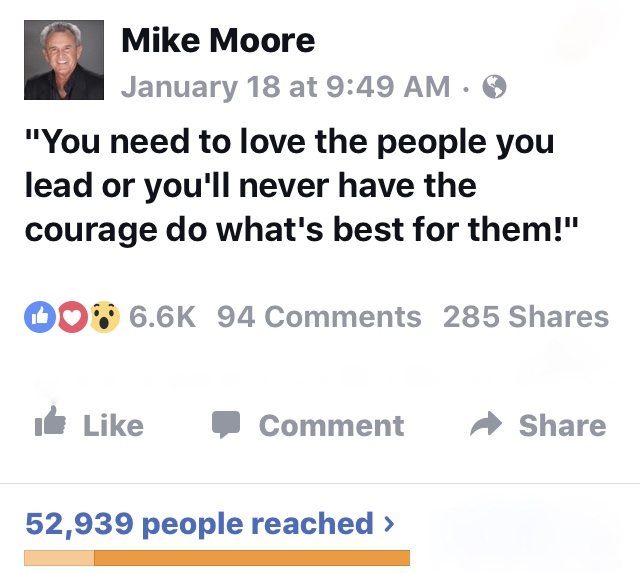
Real Leadership Is An Act Of Love!

Leaders pay attention, people will respond to your challenge is your challenge is made because you love them and want the best for them. #MooreThoughts #Leadership

A Leaders Success Rest In The Hands Of Average People

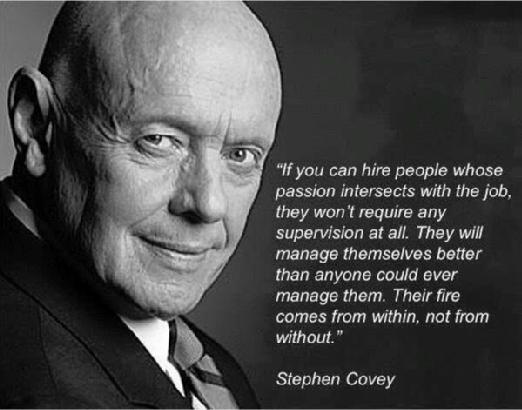
Many, including Dr. Covey, have waxed eloquently about hiring passionate, exceptional, people. This is a myth unless you are only hiring a very small group of people with unlimited opportunities for them
These people become your leaders or competition.
They move up or move out to pursue their dreams!
 to learn, earn and grow. Otherwise you will only hire and retain these types of people until they become your leaders or your competition because they move up or move out to pursue their dreams. 


So, even when you hire them you will only have them for a short time in the position they were hire to be passionate about. Keep trying to hire the best but the best needs to be defined for each position.

One of the reasons this myth keep perpetrating itself is that it sounds good to most leaders. You see most leaders think every wants to be like them, extraordinary. Most people don't, even though they can be, they don't have the will or emotional intelligence to be above average without strong mentors and leaders. This is why leaders who can coach, teach and manage people are so vital to any organizations success!


If you are leading more than a small group of people many will be average thinkers who are more interested in seeking comfort and the easy way than in being extraordinary.

This is a statistical fact, the majority of people will be average or below, especially if they aren't being coached, mentored and influenced by an effective leader.

Leadership is the key to moving a group of average people to create extraordinary results, but it is not done by expecting everyone to be exceptional. The best leaders understand they must put the right people in the right positions and then inspire and teach them to be a little more than average. A group of people all perfuming 10%-15% above average will produce extraordinary results. This is a leaders greatest challenge and the reason leadership is so vital to any group of people success.

Getting average people to come together and become teammates only happens when someone becomes a coach! This is the reason leaders who coach people continually are the most effective, and companies who teach manager how to coach and become leaders will grow and sustain their success!

By Mike Moore

A Checklist For Leaders Who Coach!

Most people make lists, some are of things to remember, some are of things to do, usually later, but this is a list of what a leader can do to be most effective. It's also important to remember that a leader cannot just check the boxes, they have to engage, inspire and motivate people. That is the intention of  my checklist for leaders.

Before we start down the list it's important to remember people are wired to be average but created and capable of becoming extraordinary. Here is my checklist of things a leader must do if they want to be extraordinary and help people experience excellence. The list isn't in any particular order because the real secret lies in apply these things when they are needed most, not in doing them as a process, but as an engagement with the people you are responsible to lead. It's about instilling a performance culture and inspiring people to think and believe the things on the list. Then, they will do them naturally as part of who they are, not just a task to be accomplished, but a way of thinking, living, working and engaging others.

CHECKLIST FOR LEADERS

Excellence is the result of never accepting mediocrity, average or the status quo. Excellence is the result of obsession, persistence a relentless pursuit of improvement.

Set standards and hold people accountable to meet them. Always be focused on and working towards
improvements.

The lowest form of behavior you allow, accept or tolerate defines who you are as a leader and becomes your company's, or organization's, culture. Raise the standards!

People are spirit, mind and body...Treat them with this as your priority and serve the whole person!

Understand that attitudes come from the spirit, skills from the mind and actions from the body. So attitudes are more important than skills.

Leaders who coach, win. Coaches adjust attitudes to improve performance.

Skills can be taught when attitudes are right, so keep teaching skills.

Actions reveal attitudes and skills, so manage actions and use the feedback to keep coaching and teaching.

Companies don't improve, people do. So, start helping people improve!

People move in the direction of their dominant thoughts...So, start manage people's dominant thoughts.

If you manage results, you're too late to lead because results come from actions, caused by attitudes.

Manage, adjust and instill attitudes to produce the best results...Managing attitudes is a leaders top priority.

Find and define your higher purpose that makes people more important than things.

Character is more important than reputation, so build your character daily.

You don't build relationship, you build trust and it causes relationships. So, never miss and opportunity to build trust.

A leader is always being watched...You lead by example whether you like it or not. People who don't want to learn, grow and improve are watching you for an excuse not to.

You have to overcome your human nature to be extraordinary and you'll have to help others do the same to be their best.

The whole truth is always more than can be seen or explained by one person.

You'll have to do the things you don't want to do, to get what you want.

You have to teach, motivate and inspire people to do the things they don't want to do, to help them get what they want and to become their best.

Trust is the most valuable currency in the world, so the truth is always the best choice and option.

It takes courage to be honest, but honesty isn't enough to be trustworthy, that requires keeping your commitments, care about others and following up and through.

Be present, pay attention and listen to people to show respect and let people know you care about them.

Communicating openly, honestly and directly isn't just the best policy, it's the only policy. Be prepared to hear the truth as well as speak it.

Most people don't really want to be extraordinary but they also don't like the idea of being mediocre.

Easy never produces excellence and you'll have to be obsessed with excellence to experience it.

People won't always like you while you're challenging them to be their best, so stop trying to please people and be committed to serving them.

You'll have to make the hard decisions and take the tough actions and this can only be done if you truly care enough about people to serve them.

Spend time with the people that need you the most and that's probably not who you'll naturally want to spend it with.

Culture does always trump tactics and culture is the cumulative, pervasive, dominant attitude of the people they lead and their responsibility to manage.

It's your job to help people be prepared to, and perform to, their best.

It's a strength to be humble, gracious and forgiving.

Forgiveness doesn't mean acceptance, it just means learning from but letting go of past mistakes.

Never defend the status quo...Be a change agent by not only embracing change but promoting it.

Change isn't painful, it's resistance to change that causes the pain.

Leadership is an act of service, caring and love to help people learn, grow and improve.

The only leaders people care about are the ones that care about people. Be that leader!

Leadership, like love is an action! The act of leadership is an engagement, it's a service that's all about helping people learn, grow and improve. It's not a process, so go and figure our how you can be of help to others and the things on my list will begin to make sense and happen naturally from your heart.

By Mike Moore


Leadership Is An Act Of With Love


We often mistake love for a feeling...It's not a feeling, it's an action. In fact, it's many actions and it's leadership at it's finest! 

Before I get to the actions that make up love, let's define love...Love is patient and kind. It doesn't envy or boast, it's never proud. It doesn't dishonor others, it's not self-seeking or selfish, it's not easily angered and it keeps no record of wrongs. Love doesn't delight in evil or dishonest gain. Instead, it rejoices with the truth. It always protects, always trusts, always hopes, always perseveres...Love never fails.

Leaders need to love people...Yes, they have to care enough to want the best for those they lead.

It's even love that gives them the toughness and hard edge they need to challenge people to be their best, to set and raise standards of acceptable behavior. This is true in parenting, business, sports and religion...It's a leaders love that powers their belief and confidence in people. It's love that emboldens them to challenge people to learn, grow and improve. It's a leaders love that gives them the courage and strength to hold people accountable and it's love that helps them be open, honest and transparent.

It's a leaders love for people that causes those people to trust them and follow them in the first place. It's love that gives the vision a leader needs to know where they are going and how to help others get there with them.

When leaders fail it's because they didn't love people or lost their love of people. It's love that enables a leader to influence and inspire people to be more than they would be without them. 

If you want to be a leader...Love more!

By Mike Moore

Overcoming Mediocrity & The Status Quo


We've all heard actions speak louder than words. That's because what we do, not what we know or say, produces our results. You've also probably heard insanity defined as, 'Doing the same thing over and over and expecting a different result'. I want to add to that, 'Doing something the easiest way and expecting excellent results'. So, it's actions that separate mediocrity from excellence.

These are truths we all know but only peak performers and leaders use to their greatest advantage. By definition, mediocrity creeps up on and overcomes the majority of people and has to be overcome to become extraordinary. You cannot expect mediocrity, or the status quo, to produce excellence.

Knowing these truths, why do people keep doing what they've been doing while wanting better results, a better life or a better company? Why do the majority hold on to and even fight to protect their routines or status quo? Our habits or routines either serve us by generating the actions that produce the results we want, or trap us in our own status quo which keeps us doomed to produce the same, or, even worse, diminishing results.

What drives people to create the routines or habits that fill their day? Why do most people create routines that lead them to produce average results? Why do most people in the same field of endeavor act so similar and have similar routines? The answer to these questions will give you the power to overcome average by creating new routines that will produce improved results.

Uncovering the motives that produce your daily routine is the first step in changing it.  Knowing how to disrupt your routine will allow you to break free from the habits that are holding you back. By managing the motive of your routine, you'll empower yourself to generate the new routines and habit needed to improve your results.

For over 20 years I've been studying people, their motives and routines. I've been interviewing individuals and asking groups of people why they do what they do each day at work. This has left me with one definitive reason average performers create their routines. The answer is to find the easiest, or most efficient way to do what they have to do each day.

As long as a person's motive is to find the easiest, most efficient or most comfortable way to do somethings, they will never produce more than mediocre results. The easiest way to do something rarely produces the best result. In fact, it's usually the worst way. 

Most people working at the same job will create similar routines that produce almost the same results. They will avoid the same challenging tasks, the one's that produce the best results. 

Sometimes, more creative and intelligent people use these skills to find easier ways to do their work. This often produces below average results from what should be top performers. Other highly skilled people may produce just above average results, while doing their job the easiest way but never producing excellence even with their superior skills. People's motives and routines must change to raise their performance and make them extraordinary.

To overcome mediocrity or the status quo, the motive driving your routines has to change from, finding the easiest way to do your job, to finding the best way to do your job.

Peak performers are constantly looking to learn, grow and improve. This helps them change their routines. It drives them to create better habits and never except the status quo. If you want to produce superior results, you'll have to develop the habit of  'Doing things you don't want to do.' These will be the things the majority of people are trying avoid that makes them mediocre.
Changing up your routines also keeps you from becoming bored, losing energy or being so focused on doing what you usually do (your own status quo) that you develop tunnel vision and miss new opportunities.

Improved self-esteem and self-confidence along with increased passion and energy are some of the additional side benefits to, 'Doing things you don't want to do.' 

Passion and curiosity to challenge the status quo always proceeds finding the best way to do anything that produces excellence. 

By Mike Moore

Leadership, Coaching & Building Teams


Winning coaches understand if they want to keep winning they can't focus on the score. The score can't be coached or managed. Instead, they have to identify the causes that produce the score they want and start coaching and managing those causes.

Are you running an organization or managing people. Are you an executive who needs to improve their company's results? It's fairly simple, even easy, to identify the results you want or need to produce. However results can't be managed. Improving areas or generating new results requires identifying the causes that produce them and coaching and managing those causes.

The first thing to acknowledge is that all working people are like performing artists. They're really the same as athletes, actors or musicians who need coaching or direction to produce peak performance. Once you acknowledge this you can begin to understand their need to be coached. In fact, you will start to understand what's missing in most organizations. IT'S LEADERSHIP AND COACHING!

Here are the areas and some specifics for you to get started if you are going to stop being a frustrated traditional executive or manager and become a successful leader who coaches people to their peak performance.

Create A Performance Culture
Instill an attitude that their work is a performance art. Build a team of passionate people who care about customers and helping people while being an advocate for their profession. This will require the full force of your will. You'll need a firm belief that you are working to leave a legacy, not just working to produce results. I used to advise my clients to only hire people who already had a passion to pursue being their best and had an outstanding work ethic. This doesn't work any longer because you won't find enough people that possess these traits. We've experienced too much of a deterioration in what's considered average. Our standards have fallen. You need to be prepared to develop and inspire people to grow and improve if you want to be a successful leader or coach.

Recruiting
Do you know your next employee? Do you have a bench, feeder system? Do you know where to look for your next employee? A coach's first action is to recruit people. This has two purposes. First, performers should know if they don't perform they can be replaced. This is the first step in instilling a performance culture. Second, and more obvious, you need to find the people you want to work with. You want to do this differently than your competition so you have a better chance of hiring people you can coach who will create a winning organization.

Coaching...Attitudes
Attitudes produce actions that generate results. Attitudes are dominant thoughts and beliefs that make up a person's state-of-mind while raising their ability to perform to their peak. Top coaches manage attitudes that create the company's atmosphere or culture. Coaches instill dominant thoughts that create positive attitudes and high emotional intelligence. This requires making personal contact daily with your people to check their attitudes. This allows time for you to support positive attitudes or coach them up to make sure they are ready to perform.

Teaching...Skills
Coaches are always teaching. They teach to improve the skills and knowledge of their people. They train people by holding them accountable to learn and improve.  It's a coaches responsibility to make sure people train so they are prepared to perform to their peak. Being a teacher and trainer is an ongoing part of being a coach. So, coaches have to study, learn and grow regularly if they are going to be a successful leader. Regular scheduled education for learning and growth are a coaches responsibility but creating a culture where change, learning and growth are a habit is the real requirement for success.

Managing Actions
Managing actions is the exercise of assigning and monitoring the work of your people. The people who don't want to improve won't like being held accountable and they often call this micro-management. It's not micro-management, it's responsible management. There are two distinct purposes for monitoring work. The first is accountability. The second, and most important, is to create real life opportunities to coach attitudes, teach skills and knowledge while assigning actions to be taken that you can monitored and do this all again. This is the circle of coaching, teaching, training and managing to coach teach and train that will produce the improved results you desire.

These are just some of the skills a successful leader and coach must master and practice daily. Peak performing management and coaching are often the missing links in a company or organization. I have been coaching, teaching and training executives and managers for more than 20 years. I was first taught these traits by my father, a football coach, and later had them reinforced in one-on-one sessions with John Wooden. I have since practiced, polished and developed them in real life business environments while by implementing them with my clients.

By Mike Moore


The Tale Of A Coach's Son

"The most difficult thing I do is getting them ready to play each week." Vince Lombardi.

CHARLES MOORE
My father, Charles Moore, was a coach and leader.  He raised me, taught me and prepared me to become a coach and teacher. I grew up in his coaching office watching game film, on the practice field and in the locker room. I spent time with him learning to game plan and plan practices to prepare athletes to execute his plans. I watched him prepare his players to perform and was on the sidelines and heard the in-game coaching,  halftime adjustments and post game speeches which were always to get them ready again. Then I spent time listening to other coaches exchange ideas and heard coaches speak at coaching clinics. I am a coach's son, raised to be a coach and thankful for the lessons I learned.

The last time I spoke to legendary Major League Baseball Manager and family friend, Bobby Cox, he reminded me that I was doing what my father raised me to do...In business, rather than in sports.

My father exposed me to many of the great coaches of the past 50 years and I learned from all of them. Coaches like Vince Lombardi, Bear Bryant, Tom Landry, Red Auerbauch,  Don Shula, Chuck Knoll. Then I began to study coaches like Bill Walsh, Bill Belichick, Pat Riley, Phil Jackson, Tommy Lasorda, Bobby Cox, Bill Cowher, Mike Tomlinson, Pete Carroll and Jim Harbaugh. The one who influenced me the most after my father, was in my opinion the greatest coach of all time...John Wooden.

THE HARBAUGH'S
My Dad spent my childhood, teenage years and early adult life preparing me and helping me refine my coaching insights and skills. He and I talked for hours on end about how to apply what we both knew about coaching to business leadership and management. We found that all he had taught me applied to coaching, executive leadership, sales management and salespeople. In addition, I learned something from every coach I ever played for, every person I ever worked for and every client I every consulted with or trained...Every single one of them!

I found that life and business was a performing art, just like sports. I also learned that people performed best when 'coached up' by a leader. I believe that sports are important to society not because of who wins or loses but because of the lessons we can learn about peak performance, coaching, teamwork and leadership. Don't get me wrong, winning makes playing the game more fun, just as achievements make life more fun, and coaching and leadership is about preparing people to have more fun!

After using all I had learned to lead, coach and manage people, I began writing, speaking, teaching and training about what I had learned that would help others prepare to perform to their peak to produce their best results. 

JOHN WOODEN
I was blessed in 1996 to have John Wooden take the time to meet with me. We spent hours discussing coaching, leadership and teaching. John graciously spent those hours at his home in Encino, California where we shared ideas about how leaders should view winning, losing, relationships and life. He opened up and shared his wisdom and insights and patiently answered all my questions. I lost my father, Charles Moore, in 1992 and John in 2010. I miss them both and feel very fortunate to have called them my mentors and coaches...I love them both.

Their influence and impact on me, and many others is their legacy and the reason they will never be forgotten. The lessons I learned from my father, John Wooden and the other great coaches have served me well and helped me serve others.

Now, I am teaching leaders, managers and coaches how to build businesses, teams and individuals that produce their best results. The following are some of the high points I teach in my 'Locker Room Leadership' seminars and coaching sessions.
  1. Great leadership, coaching, teaching and managing is an act of will.
  2. Leadership is something you do with people, not to them.
  3. If you stop learning you'll stop leading.
  4. In a locker room, boardroom, sales office or any group, if you pay attention, you can hear and feel the attitudes of the people.
  5. If you pay attention you can tell if people are ready to perform.
  6. Peak performance is a Spirit (Attitude), Mind (Knowledge and Skill) and Body (Actions) experience...To win in sports, business and life, they have to always be in that order.
  7. Leaders don't worry about averages or excellence they raise the standards...The lowest form of behavior that's acceptable.
  8. Who you are as a coach or leader is the lowest form of behavior you except...It's not your average or top people's performance but your lowest producing performers...That's who you are as a leader.
  9. Winning coaches spend time with the people they least want to engage...The people who need to improve the most.
  10. Leaders assign, monitor and teach to generate improvement.
  11. Leaders manage the atmosphere...the air! They do this by managing attitudes because attitudes create behavior that results in winning.
  12. Leaders inspire, motivate and hold people accountable to be their best.
  13. Leaders challenge people to change their average thinking, so they can grow and improve.
  14. Leadership skills can be taught, learned and improved but need insight, intuition and a personal touch to become most effective.
  15. Great leaders love people...That's where their insight, intuition and personal touch comes from.
  16. Most managers and coaches sabotage the results they want by trying to manage the results.
  17. When you manage results you’re too late to lead.
  18. Results, the score and winning, can’t be managed. Winning comes from preparing the spirit, mind and body.
  19. Results, the score and winning come from the intentions, attitudes, skills and actions that were present long before the results.
  20. Intentions, attitudes, behavior and skills can be taught and managed through the discipline of preparation.
  21. Winning will take care of itself when leaders manage the things that create the score.
  22. Leaders lift people to accomplish beyond their own expectations through preparation.
  23. Never forget that your standards define who you are as a coach or leader.
  24. Leaders never compromise their standards, instead they use them to teach, motivate and inspire.
  25. Leadership is about people first but no one person is more important than the team.
  26. Treating everyone the same is the fastest way to show favoritism.
  27. It takes courage to treat each person the way they deserve to be treated…The way that's best for them.
  28. Leader’s help people grow and become their best by working with them, to get them to do the things they don’t want to do, that will create the results they both want.
  29. Leaders manage people’s intentions, attitudes and dominant thoughts that create the behavior that produces the results.
  30. Leaders pay attention and listen to manage the atmosphere by managing the attitudes and state-of-mind of people.
  31. Great leaders get uncommon results from common people by requiring them do the work to become uncommonly prepared.
  32. In the absence of leadership, mediocrity will lead and failure is assured.
  33. You won't know how good a job you've done until you see how the people you've led, mentored and coached turn out...Sometimes that takes years.
 By Mike Moore

Leaders Set, Raise & Maintain Standards

Leaders set, raise and maintain standards. Let's be clear what that means. It's not the averages...It's not your best...Standards are the lowest form of behavior you will accept.

At the end of the day the lowest form of behavior you accept, is who they are as a leader. Think about that for a minute and let it sink in...Re-read it!

Once you accept that who you are is attached to the lowest form of behavior you accept, once it truly sinks in, it should motivate you to deal with that person or persons who has been lagging behind or causing you to be frustrated. It should also make you look at the bottom and work to raise the standards not just celebrate the top and hope that the bottom 'Gets It'. This understanding will motivate you to stop sending subtle messages and start communicating openly, honestly and directly. Making direct communication your strength is a key component to becoming a 'people first' leader. This will help make the standards clear to those who have to perform to meet them.

Focusing on setting and raising standards motivates leaders to spend their time working on their lowest performers . This means they have to invest their time in the people who they'll least want to spend it with. Until you decide your job as a leader is to improve the lowest performers you'll avoid them and spend too much time with the top performers. That's often what managers do, but leaders know and understand it's the bottom performers that drag the organization down so they invest their time in them.

Leaders are always teaching people to do what they don't want to do, to get what they want and it starts with you...If you do what you don't want to do, what you'd put at the bottom of your 'To Do List' first, then you'll get what you really want...Higher standards and improved performance.

Celebrate success and enjoy your top performers, but invest in those that can improve the most.

Raising the standard will raise the performance of your middle performers because they don't want to be too close to the bottom. This in turn will drive the top performers as they will rise to the occasion and maintain their position at the top while setting new highs.

Setting and raising standards increases everyone's pride in their position and organization. Most people may not be motivated to be extraordinary, but no one wants to be average...Maintaining high standards will improve everyone self-image, personal pride in their organization and motivation to not accept average behavior.

Setting and raising standards is where the hard edge of leadership comes in. No compromise is acceptable or it isn't a standard, just a suggestion.

Standards are met or there are consequences...The first consequence is more attention, coaching and teaching. The last consequence is replacing people to maintain the standard. Invest your time in the bottom performers , raise the standards, help people change to meet them...or change your people.


Sales Leaders Coach To Create Peak Performers

This article is for all the salespeople, sales managers and executives who've been trying for years to improve without using the best tools available to achieve their best results. It's time to take advantage of all the tools available even if they make you uncomfortable.

SALESPEOPLE
The best tools available to improve your sales communication, attitudes, skills and actions are video and audio of live interaction between you and real consumers. I'm not talking about video shoppers...I'm talking about live selling engagements between real shoppers and salespeople in real selling situations. 

Selling is a performing art...Like athletes, actors and musicians you need to use live video and audio to review the selling engagement with consumers.    This is the best way to view how you're communicating with consumers. It's like athletes watching game video, not video of practice. Oh, and they do that too, so both are valid, but the best results come from watching and hearing real live selling engagements. 

Viewing and listening to live selling engagements with consumers allows for self coaching by salespeople so they can improve more quickly.  It’s the best way to create and reinforce the proper intentions, attitudes, actions and skills that will enable sales professionals to serve consumers, making customers and increase sales. So why don't you use it...Comfort, cost or fear...All poor reasons to not challenge yourself to be your best. 

Salespeople, like athletes think they are doing one thing until they see it for themselves. Rapid behavioral changes takes place when we watch ourselves and bold, significant results are achieved. If a picture is worth a thousand words, live video and audio is worth million...literally!

We can continue to read, talk and listen about how to sell, we can video practice or we can add viewing our live performances and make the changes necessary to improve the profession of sales.  When we are viewing and listening to live engagements, the lectures, reading, and studying we do becomes more valuable and magnifies it's impact to create the best results.

Live video and audio is greatly different than mystery shoppers or roll playing, even though both are needed exercises, they are insufficient to produce peak performance. Mystery shopping and roll playing misses the key ingredient in communication and human interaction, the intentions of the people communicating. Mystery shoppers and roll playing find out if salespeople know the right information about their products, services and company. This can be also be accomplished by written or verbal quizzes and tests.  

When you view the interaction between people with the real intentions you experience in live selling situations, you'll see, hear and know how you are truly communicating, interacting and responding with them. Then you will know what you need to do to improve.  Without the intentions of both people being real in a conversation, negotiation or a selling situation, it's just practice and it's insufficient to become your very best. Mystery shoppers and roll players have no intentions of buying and salespeople aren’t selling.

For many years, I've been teaching that salespeople practice their profession on consumers.  Unfortunately, this is an obstacle to rapid self-improvement unless it can be reviewed and used to improve.  If you don’t want to improve enough take responsibility, mature as a sales professional and use the best tools available, you are doomed to continue without ever achieving your best results.

I firmly believe we haven’t seen the best of the profession of selling but can if we are willing to add these tools to the lectures, reading and training we've used in the past.

SALES MANAGERS

The time has come to stop worrying about how good your salespeople are and start finding out.  Live video coaching will expose what you may be afraid of but you can’t change and begin to improve until you find out. It is time to acknowledge that we need to grow up and begin being the professionals we profess to be.

The idea that we have tools to improve at our disposal and haven’t utilized them, is a shame. That said, let’s not look back but begin now to use live video and audio to coach and improve the relationship between consumers and salespeople.

I know many sales managers who have resisted using these tools and can only wonder what they are afraid of.  Nothing we do out of fear will ever be a best practice.  In coming years, sales managers will use live video and audio to stay informed and coach their salespeople as a standard business practice.

Live video and audio is not intended to be a punitive tool but does create accountability.  It is a coaching and self-improvement tool.  Coaches have to be informed and pay attention to be effective. Live video with audio is the best way to pay attention.  You can’t coach what you’re unaware of.   As an accountability tool, salespeople in all selling environments, will be less likely to give less than their best effort to consumers when they know they are performing live all the time. A salesperson giving consumers their best effort is part of the maturation and growing process of the profession of sales.

EXECUTIVES
When executives accept that decades of doing business with the intention to make sales has broken the relationship between consumers and salespeople, then they need to take responsibility for this broken relationship and lead their business with a new intention.

It is time to start making customers, not sales, and live video and audio is the best tool to make sure this new intention is implemented.  

Too many years of talk and not enough action, has left the consumer believing businesses don’t care about them.

Executives have made too many decisions about how to operate their business and make profits without considering how it would affect their salespeople's communication with consumers and ultimately how this would effect their business, revenue and profits.

Most executives believe that people are the driving force to improve their business and live video, audio and new intentions will also energize  salespeople. Live video and audio can implement the intention to make customers, not just sales and result in increased sales, lower costs, increased profits and sustainable growth.

You wouldn’t run a business that depended on athletes peak performance without video for coaching and improvement. Don’t invest and risk your company’s money without using the best tools to insure peak performance from your salespeople.

PEAK PERFORMANCE

Live audio and video coaching should start with salespeople, then be available to the sales manager, and finally to executive management in a company. Teaching people how to use live video and audio during the implementation is key.

Keeping the focus on the self-improvement is the most important element in producing significant results.

Live audio and video coaching should never be punitive or feel as though big brother is watching.  Starting with salespeople allows them to quickly learn how valuable seeing and hearing themselves in real situations can be.  They even begin to use the information learned to build relationships in their follow-up with consumers.

After the salespeople become comfortable, learn to self coach and experience rapid improvements, then sales management can begin using the audio and video as a teaching and coaching tool. Seeing, hearing and knowing what is happen between their salespeople and consumers is the best information to develop the company's sales strategy and how to inspire, motivate and manage each salesperson.

Executives are the last to view and listen. This allows them to know how their salespeople are doing, see the improvements, build their confidence and understand why sales are increasing. This allows executives to have a better understanding of their customers and how best to market to them as well. Constant improvement and peak performance has many leadership benefits to the company.

Without live audio and video, a commitment by everyone to be their best by using the every tool available, we will continue to manage sales in the dark and suffer the consequences of poor sales communication and interaction with consumers.

It is time to use the best tools and begin to experience the best of the profession of sales!

By Mike Moore

Winners Don't Watch The Scoreboard


To win in business and life, stop watching the scoreboard and start coaching or playing the game to the best of your ability! You'll be able to deal with the final score if you always give your best effort, but you won't give your best effort while watching the scoreboard.

We're living and working in a rapidly shifting world and economy so you can't just wait for a recovery or things to go back to normal. You can't produce new success by going back to good old basics. In fact, anything with 'back' in it is the wrong strategy this time around. 

Selfish, short-term intentions have created poor behavior that has led us to a crisis in personal and business relationships alike. These selfish intentions cause people and businesses to look at what's in it for them, work to get more while providing less and damages the relationships that can make us rich both personally and professionally.

These selfish intentions have caused people to look only at today's scoreboard and not at the final score. We've been so busy winning the first quarter we're losing the game. Life and business are both best when built on a sustainable 'people first' culture.

Championship coaches don't spend their time focused on the scoreboard or asking the players what the score is during the game. If they did, they'd lose more often than they'd win. This behavior is what executives and sales managers have been doing for years and it's no wonder businesses are struggling because this behavior sabotages the score. In business, this behavior creates a focus on new sales, new subscribers and today's numbers instead of customers which generates diminishing, unsustainable results. Making customers makes a business healthy, profitable and sustainable.

Poor intentions are sneaky, they slip in unintended and damage the result we want. Take for example when the boss asks, “How are you doing?”, what do they mean?  They are most often checking up on sales and a discussion of the company’s sales statistics ensues. Typically, right after this conversation, calls are made down the chain of command to each level until a sales manager calls a salesperson or store manager with the same conversation. This, “How are you doing?”, when we mean, “How are sales?” needs to stop.  This is the coach asking the players the score during the game.  

We need new conversations that will only occur from new intentions and generate a new sales engagement with consumers. We need a 'people first focus' to build relationships and generate positive results by serving people rather than trying to please them.

Watching the score and waiting for it to get better won't get it done this time. There's no recovery coming, just opportunities to begin again. This time, our best opportunity is to play the game with new thinking and intentions that can drive the attitudes, skills and actions that will produce healthy relationships with consumers and generate success!

It's so easy to slide back into the instant gratification of making new sales rather than customers. It's the comfortable old path that sabotages the possibility for your new success.

It will take 'people first leadership' to create a 'customer first company' and solid sales management to keep salespeople on track to win and generate a healthy new economy.  

By Mike Moore